

Fine Straining: When the Second Strainer Helps
Use fine mesh to keep ice chips and fruit fragments out of a drink served up. A stirred Manhattan usually has nothing for it to catch.
A second strainer earns its place when there's something for it to catch. In a shaken drink served up, that means ice chips or small pieces of fruit and herbs that slip past the shaker strainer.
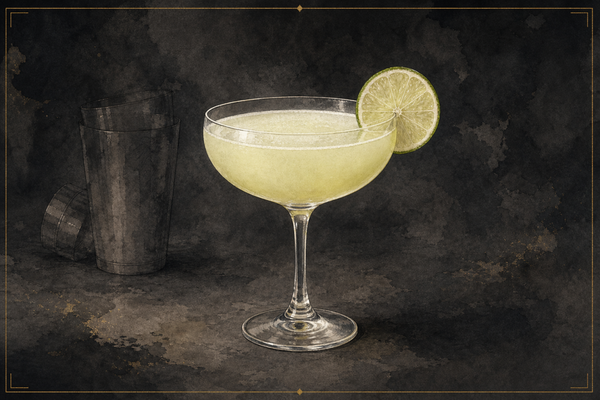
A Daiquiri should arrive cold, with a clean surface. If yours has a raft of broken ice floating across it, put fine mesh between the shaker and the glass. A stirred Manhattan usually needs only the main strainer.
Two strainers, one pour
The Hawthorne Strainer sits at the mouth of the shaker and holds back the bulk of the ice. The fine strainer catches smaller material downstream. Using both at once is called double straining.
Set the serving glass on the counter. Fit the Hawthorne securely against the tin and hold the sieve above the glass, clear of the rim. Pour through the center of the mesh in a steady stream. Keep the sieve above the rising liquid so it can drain.
Don't pour into a sieve without the main strainer. A small mesh bowl isn't built to hold a shaker's worth of ice.
Use it where the texture calls for it
Shaking breaks ice into small pieces. Those pieces keep melting after the drink reaches the glass. Fine straining catches them before they settle on the surface of a drink served without ice.
Fruit brings a different problem. Berry seeds and torn mint can pass through a Hawthorne. When those fragments don't belong in the finished drink, the sieve does useful work. A fruit drink strained into a coupe is a good candidate.
A Mojito served with mint in the glass has a different finish. Straining away those ingredients changes the drink. Choose the texture deliberately instead of treating visible fruit as a mistake.
A slow drain needs less pulp
If the sieve backs up, stop pouring before it overflows. Empty the trapped solids and rinse the mesh before continuing. Forcing pulp through with a spoon puts the material you meant to remove back into the drink.
Over-muddled herbs make this worse. Leave mint leaves largely intact when pressing them, and reserve heavier pressure for fruit. The strainer can catch fragments; it can't undo what you've extracted.
Leave the mesh out of a clean stirred drink
Stirring a Manhattan doesn't batter the ice the way shaking does. With no fruit pulp or broken herbs in the mixing glass, a second strainer usually adds work without improving the pour.
Start with the Daiquiri for a useful application. Shake it in the Boston Shaker, then pour through the Hawthorne and fine mesh into a chilled coupe. Rinse the sieve while the trapped citrus is still wet, then wash it after use.
Recipes
Make these
Tools
Get the right tools

Hawthorne Strainer

Boston Shaker
0 Comments
Keep Reading
More from The Art of Gathering

Fall Cocktails With Better Structure
Fall cocktails need structure, not pumpkin syrup. Use darker spirits, amaro, apple, and spice with restraint.
Bitters Beyond Angostura: Building Your Collection
Bitters are seasoning. Build the collection by use, not by label count.
The Dry Shake: When and Why to Use It
A dry shake builds foam before ice chills the drink. Use it when texture is part of the cocktail.